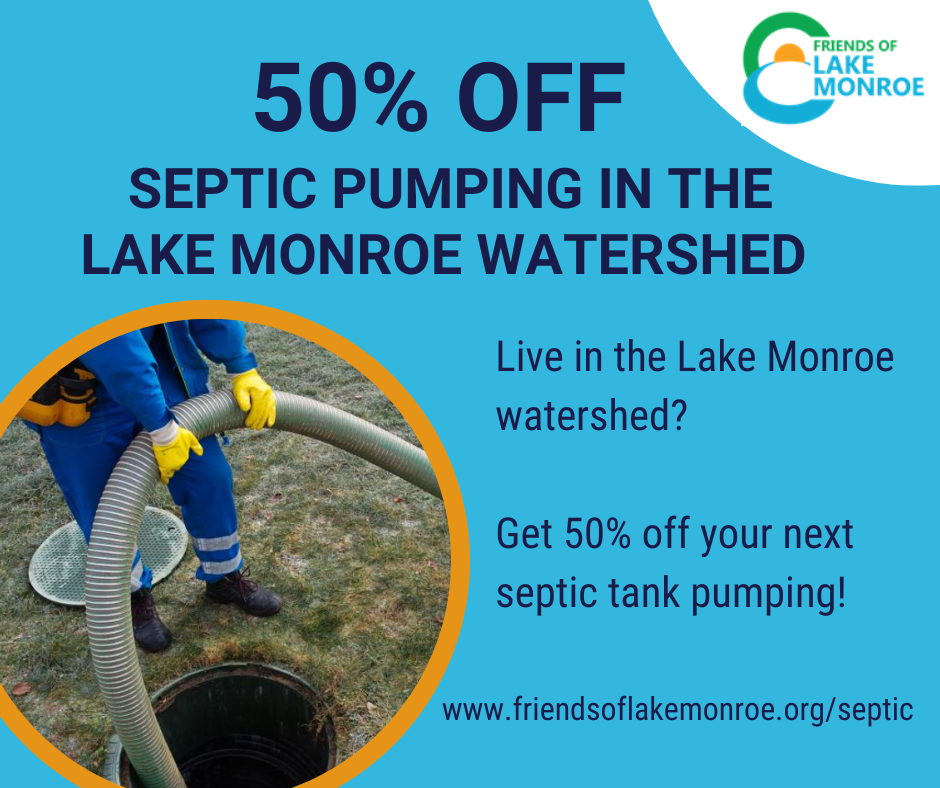
Exciting news! We are now able to offer financial support for septic system maintenance through our 319 grant! If you live in the Lake Monroe watershed, you can apply for our Septic System Maintenance Cost-Share Program and receive a 50% refund on septic tank pumping. We have run previous programs in different parts of the watershed but this is the first that covers all three counties (Monroe, Brown, and Jackson). There is also funding available for modest septic system repairs like replacing a pump, replacing pipes, or adding a riser. (A riser is a concrete or plastic pipes that connect the lid to your buried septic tank to a lid at ground level. They are required on new systems but were not installed on a lot of older systems.)
We also continue to offer funding for agricultural and forestry projects through our Conservation Cost-Share Program. This program covers a variety of projects that improve water quality such as cover crops, installing heavy use area pads where livestock gather, adding water bars to eroded forest trails, and reseeding pasture where there is erosion potential. We approved two more projects this quarter. The first is installing a heavy use area pad and frost-free waterer for a small cattle operation. The second is planting over 500 acres of cover crops.
Cover crops are special crops that are planted after the main cash crop (such as corn or soybeans) is harvested. These crops are designed to hold soil in place and feed soil microbes through the winter months, helping the soil stay healthy and resistant to both flooding and drought. Cereal rye is one of the most common cover crops as it can be planted late into the fall and still sprout (though sometimes not until spring).
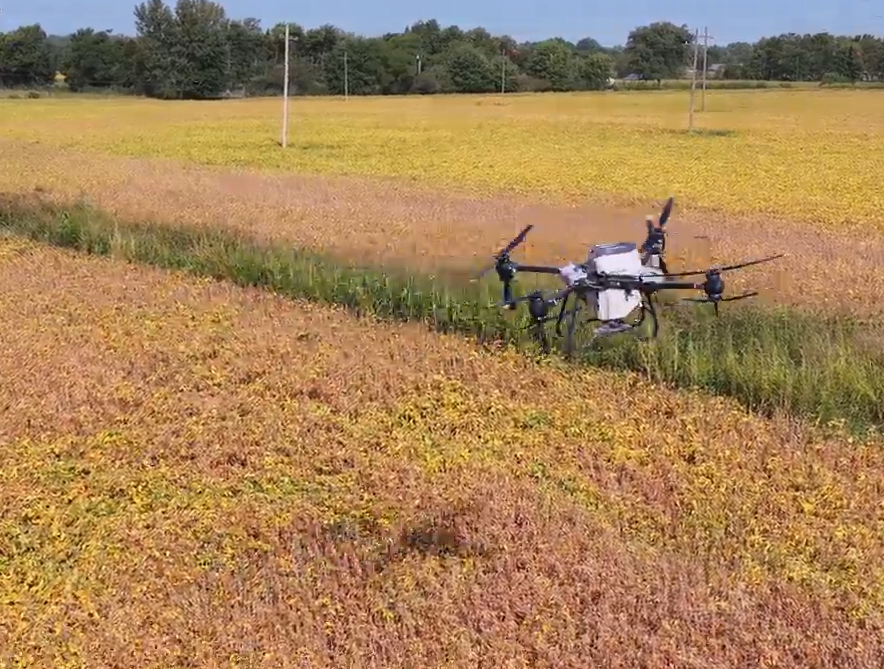
Part of the project we are funding involved planting cover crops into standing soybeans using a drone. The drone flies over the fields and drops seeds (in this case radish and crimson clover) which then have the chance to start growing under the soybeans. In this project, the farmer will also come through after harvest to sow oat seeds so there will be a three-way mix of radish, crimson clover, and oats growing in the fields. We are very excited to see how the cover crops grow and if it feels like a significant improvement over a simple planting of cereal rye.
If you know someone in the Lake Monroe watershed who might want to work on a project, please encourage them to contact Maggie Sullivan at watershed@friendsoflakemonroe.org or 812-558-0217 to schedule a free consultation.
